
Melikki's Primate Rescue Center Rescues 3 Week Old Panamanian Capuchin Monkey Infant


Last Sunday, an urgent call for help about a tiny, delicate, little three-week-old Panamanian capuchin monkey infant orphaned by its mother was in need of rescue. The baby - named 'Abu' by its rescuers, had fallen from its mother in an area where it wasn't safe enough for her to go to the ground to retrieve him. Efforts to elevate the infant to a safe place up in the tree to be reunited with his mother were unsuccessful as heavy rains set in and the troop of monkeys didn't return.
Fearing the fragile infant would succumb to exposure, he was taken in by a local couple who promptly fed him an infant formula and tucked him into a warm, safe place as they figured out what the next step was. A quick search led them to Melikki's Primate Rescue Center that we operate here on our property. After some calls to our local department of wildlife, Abu arrived Tuesday morning where he is now under specialized care after being rescued by Melikki's Primate Center, a rescue that highlights both the fragility of infant primates and the careful work required to keep them alive.

At that age, a capuchin is still fully dependent on close warmth, frequent feeding, and constant monitoring. A baby this young cannot simply be placed in a cage with food and expected to recover. Neonatal primate care is hands-on, quiet, and demanding. These first days after rescue are the most critical moments of his survival as he battles the myriad of stresses being separated from his mother.
We work closely with several veterinarians who guide us on his care focusing on
stabilization, nutrition, comfort, and long-term planning. For a three-week-old capuchin, those steps matter because early care shapes more than physical health. It also affects how the infant learns to cope, bond, and eventually interact with other primates.

Capuchin infants normally spend their earliest weeks clinging to their mother, nursing often, and staying close to the warmth and safety of the troop. Without that support, an infant capuchin can quickly face serious risks including dehydration, low body temperature, stress, poor nutrition, and exposure to illness. Even small changes in feeding, warmth, or handling can have large effects on such a young animal.
A rescue like this also requires restraint. Abu, like all infant animals is adorable, but a young primate is not a novelty or a pet. Our care focuses on his needs with the goal to protect his health while avoiding excess handling and keeping the environment as steady as possible.
Capuchins are intelligent primates with complex social lives. They learn from watching, clinging, vocalizing, and responding to the group around them. For a baby, this early contact is not just emotional. It supports survival and development. At Melikki's we have other primates that he is slowly and safely introduced to, including Kunochi who is his same species.
Caring for Abu is a long-term, complicated commitment focused on his ability to one day be returned to the area he came from to be reunited with his troop in the wild again where he can thrive and support the future of his species.
Primate rescue as an educational experience for a better future for the animals
Melikki's Primate Rescue Center was created because life at our eco resort became more than creating an incredible experience for global travelers - it became a true responsibility to the nature that surrounds us. A very important element of what Melikki's is, is the education that we share with our guests. There is much to learn from what we are doing here, and our guests are deeply moved by the experience to witness it firsthand.
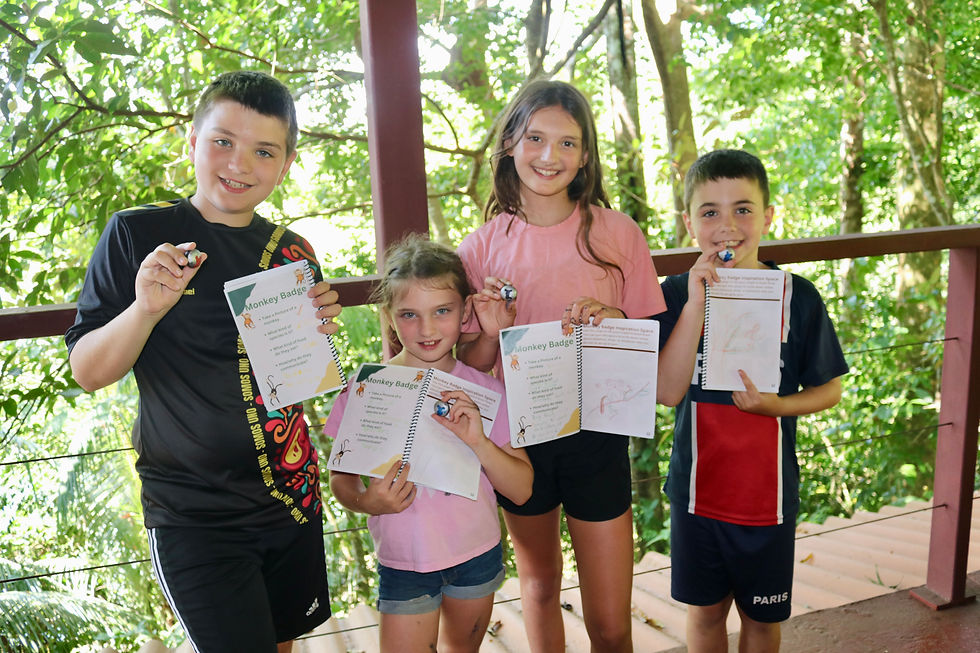
Recent guests earned their primate badges by participating in an educational experience at Melikki's. During their visit, they learned about the threats Panama's primates face, how each person can help make a difference, and learned about one of our most important conservation messages: why primates belong in the wild - not as pets.
The rescue by Melikkis Primate Center gives this infant a chance at survival and proper care. It also gives our guests and our community a chance to see what responsible primate rescue really involves. Every Monday - "Monkey Mondays" we post updates on our instagram page so you can follow along on Abu and other rescues progress.
With love from Panama,
Cari and Ryan Mackey
Owners & Hosts


This piece beautifully captures the paradox of closeness and distance, reminding me how genuine connection often thrives even through separation. The metaphor of the eye and vision really struck me — it reflects how two parts can remain distinct yet inseparable in purpose. In many ways, this relates to the balance we seek in our own lives: between individuality and unity, or effort and understanding. It also resonates with how we handle creative or academic collaborations — working together while respecting each other’s space and strengths. Personally, I found it inspiring, much like how a good bc game helps students bring clarity and coherence to complex ideas without taking away their personal voice. This article lingers in thought long…